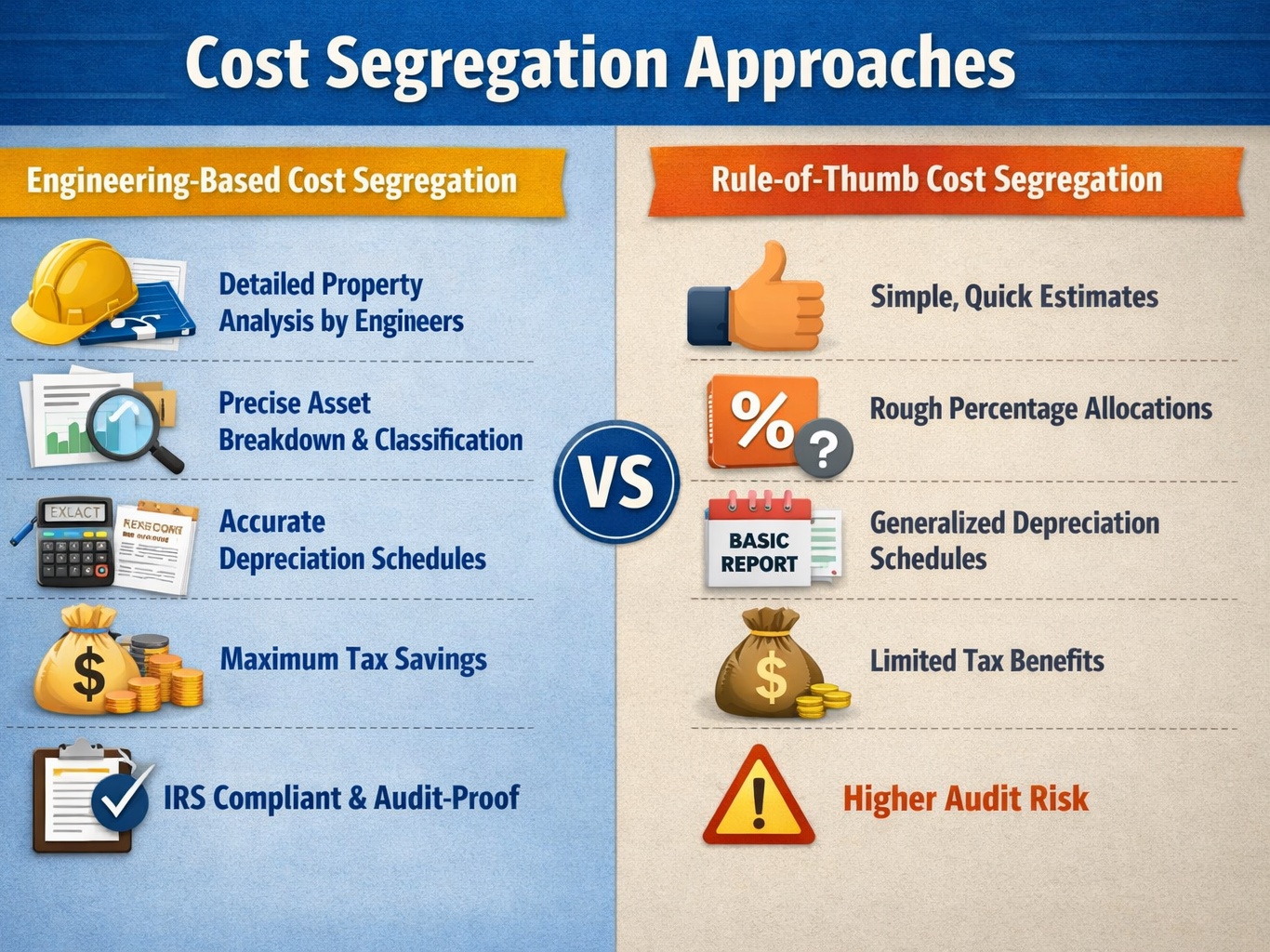
Two cost segregation studies can look nearly identical on the surface. Both promise to accelerate your depreciation. Both hand you a report at the end. But the method behind that report makes all the difference. Choose an engineering-based cost segregation study, and you get defensible numbers built on real analysis. Settle for a rule-of-thumb estimate, and you may be gambling with deductions worth thousands of dollars.
Here is what every real estate owner should understand before commissioning a study.
What “Rule-of-Thumb” Cost Segregation Really Means
A rule-of-thumb study takes a shortcut. Instead of analyzing your specific property, it applies broad percentages drawn from generic industry averages. The preparer might assume that 20% of any building belongs in a 5-year class and another 10% in a 15-year class, then apply those figures across the board.
The appeal is obvious. It is fast, and it is cheap. But your property is not an average. A medical office, a warehouse, and an apartment complex have wildly different component breakdowns. A percentage borrowed from someone else’s building has no real connection to yours. That gap is exactly where the risk lives.
How Engineering-Based Cost Segregation Works Instead
An engineering-based study starts with your actual building. Licensed engineers review construction documents, examine the property, and identify every component that qualifies for a shorter depreciation life. They measure, they document, and they assign costs based on what is genuinely there.
This is the method the IRS describes as the most accurate and reliable approach in its own Audit Techniques Guide. The agency reviews the underlying detail and the supporting evidence when it examines a study. You can read the IRS position directly in its Cost Segregation Audit Techniques Guide.
Why the Difference Could Cost You Thousands
The financial gap between the two methods shows up in two ways.
First, a rule-of-thumb study often leaves money behind. Generic percentages tend to be conservative. They miss property-specific assets that a detailed engineering analysis would have caught and reclassified. Every component that stays on the 39-year schedule by mistake is a deduction you delay for decades.
Second, and more dangerous, a shortcut study can fall apart under audit. If the IRS questions your numbers and you cannot show the analysis behind them, the agency can disallow the reclassifications. You could face back taxes, interest, and penalties on deductions you thought were safe. The few dollars you saved on a cheaper study evaporate in a single examination.
What You Should Look For in a Quality Study
- Licensed engineers. Real expertise in both construction and tax law drives an accurate result.
- A site-specific analysis. Your study should reflect your property, not a generic template.
- Detailed documentation. Every reclassification should trace back to clear supporting evidence.
- Audit-ready reporting. A strong report stands on its own if the IRS ever asks questions.
At Cornerstone Cost Segregation Group, our licensed engineers build every study on this foundation. You can learn more about our team and approach on our about page.
Protect Your Deductions With Engineering-Based Cost Segregation
The choice between methods is not really about price. It is about whether your tax savings will hold up when it matters most. An engineering-based cost segregation study costs more upfront because it does more work, and that work is exactly what protects you.
Do not let a shortcut put your deductions at risk. Contact Cornerstone Cost Segregation Group for a free savings estimate, and let our engineers show you what a properly built study can do for your property. Reach out through our contact page to get started today.