You closed on your building three years ago. The deal is done, the tenants are in, and your accountant files the same depreciation schedule every spring. Then someone mentions a cost segregation lookback study, and a knot forms in your stomach: Did I miss my chance?
Here is the good news. You did not miss anything. A cost segregation lookback study lets you capture the depreciation you have left on the table since you bought the property. You will not need to amend a single prior tax return. Three years in, you are not too late. In fact, you may be sitting on a sizable deduction you can claim this year.
The Myth: Cost Segregation Only Works in Year One
The most common reason owners skip cost segregation is timing. They assume the study has to happen the year they buy the property. Once that window closes, they believe the opportunity is gone for good. It is an understandable assumption. It is also simply not how the rules work.
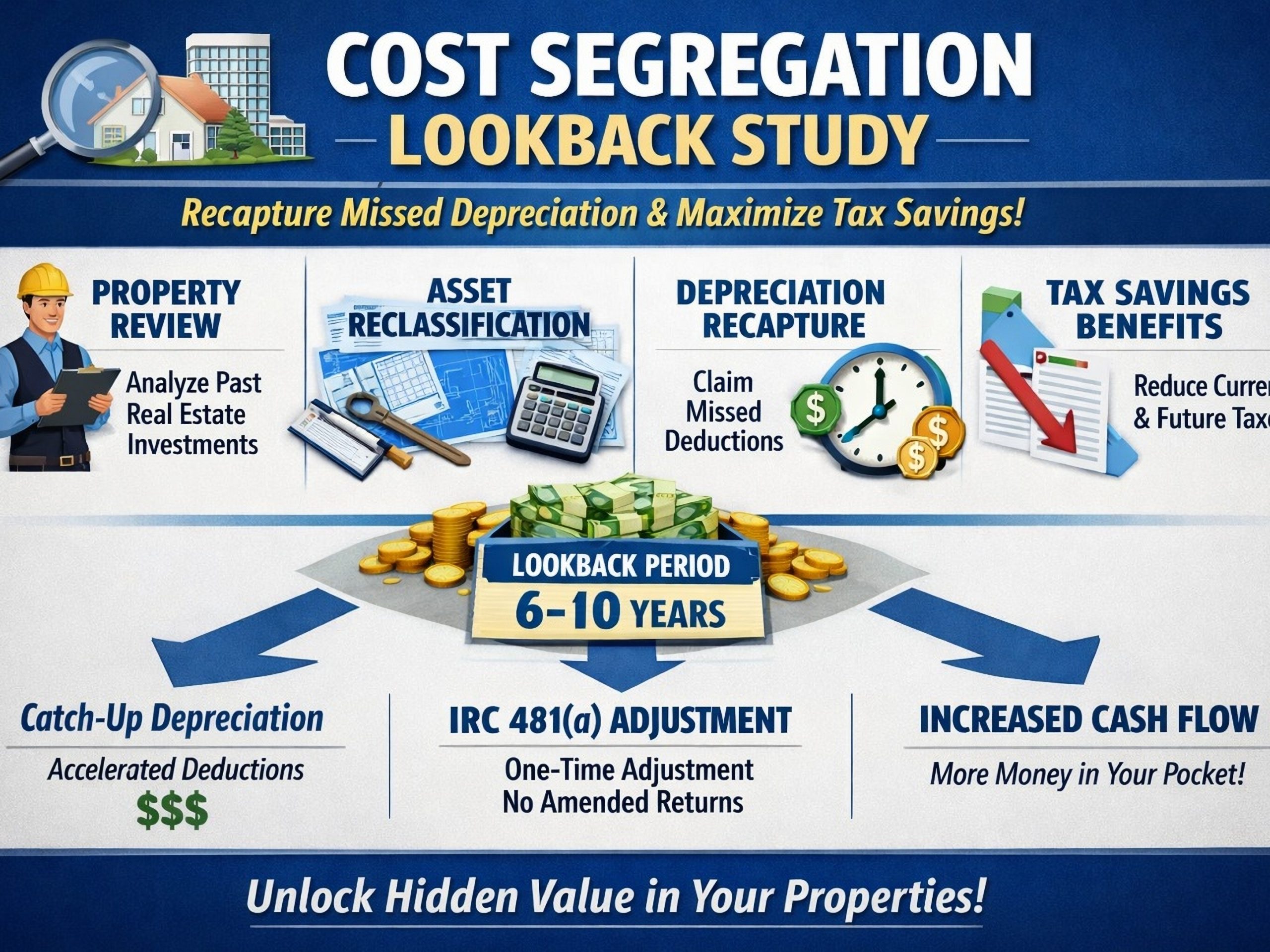
The IRS lets you perform a study on a property you already own and “catch up” on the depreciation you should have taken all along. The mechanism is a procedure called a change in accounting method. It is far more accessible than it sounds, and it forms the backbone of every lookback study we run at Cornerstone Cost Segregation Group.
How a Cost Segregation Lookback Study Actually Works
When you buy a building, the default approach spreads its cost over a long depreciation life. That means 27.5 years for residential rental property and 39 years for commercial property. This slow, straight-line schedule treats the entire building as one big asset.
A cost segregation study breaks that building into its real components. Carpeting, cabinetry, specialized electrical, decorative lighting, parking lots, and landscaping do not belong on a 39-year schedule. Many of these items qualify for 5, 7, or 15-year depreciation lives instead. Reclassifying them lets you write off a meaningful portion of your property far faster.
For a property you bought three years ago, a lookback study calculates all the accelerated depreciation you could have claimed across those years. You then capture that entire amount as a single deduction in the current tax year. This “catch-up” adjustment is known formally as a Section 481(a) adjustment. The IRS allows this catch-up through Form 3115, the Application for Change in Accounting Method.
The Best Part: No Amended Returns
This is the detail that puts owners at ease. A lookback study does not require you to reopen and amend three years of tax returns. You report the catch-up adjustment on your current return. That keeps the process clean, efficient, and far less disruptive than people expect.
You skip the paperwork headache that would otherwise stretch back to your purchase date. Instead, you get a single, well-documented adjustment. It delivers years of missed deductions in one lump sum. The result often produces a substantial reduction in your tax bill the very year you complete the study.
Why Three Years In Can Be the Perfect Time
Owning your property for a few years is not a disadvantage. In many ways it is ideal. By now you have a clear picture of your income, your cash flow needs, and your tax situation. You know whether a large deduction this year would genuinely move the needle for you.
- You have accumulated depreciation to recover. Three years of missed accelerated depreciation can add up to a significant catch-up deduction.
- Your cash flow strategy is clearer. You can time the study to a year when the tax savings matter most.
- You can pair it with other planning. A large deduction can offset a strong income year, a property sale, or other taxable events.
- The savings are still fully available. Waiting three years did not shrink the opportunity. It simply deferred it.
Is a Cost Segregation Lookback Study Right for Your Property?
Cost segregation delivers the strongest results for income-producing real estate. That covers a wide range of property types: commercial buildings, multifamily and apartment complexes, office and retail space, industrial facilities, and residential rentals. If you own real estate that generates income and have never had an engineered study performed, value is likely hiding in your depreciation schedule.
The quality of the study matters, too. A properly engineered study holds up under IRS scrutiny because licensed engineers physically analyze the property and document every reclassification. Our team builds every study to be audit-ready. You can learn more about our approach and credentials on our about page. You get both the savings and the peace of mind that comes with solid documentation.
Three Years In, the Opportunity Is Still Wide Open
So, is it too late for cost segregation on the building you bought three years ago? Not even close. The tax savings you assumed were gone are still waiting for you. A lookback study brings them all forward into a single, current-year deduction. You will not file a single amended return to claim them.
The only real question is how much you have left on the table. Contact Cornerstone Cost Segregation Group for a free savings estimate, and let our licensed engineers show you exactly what your property could unlock — three years in or more.